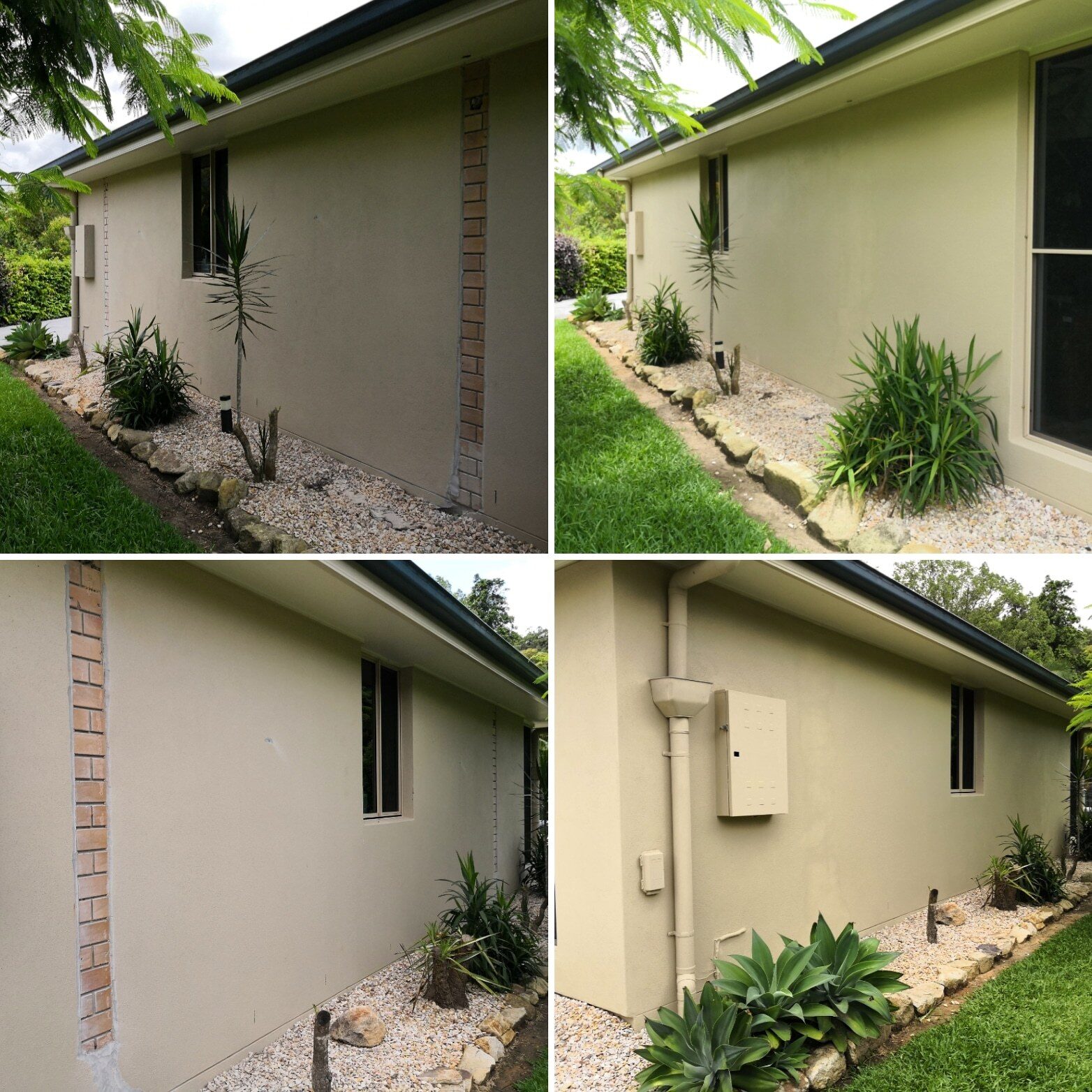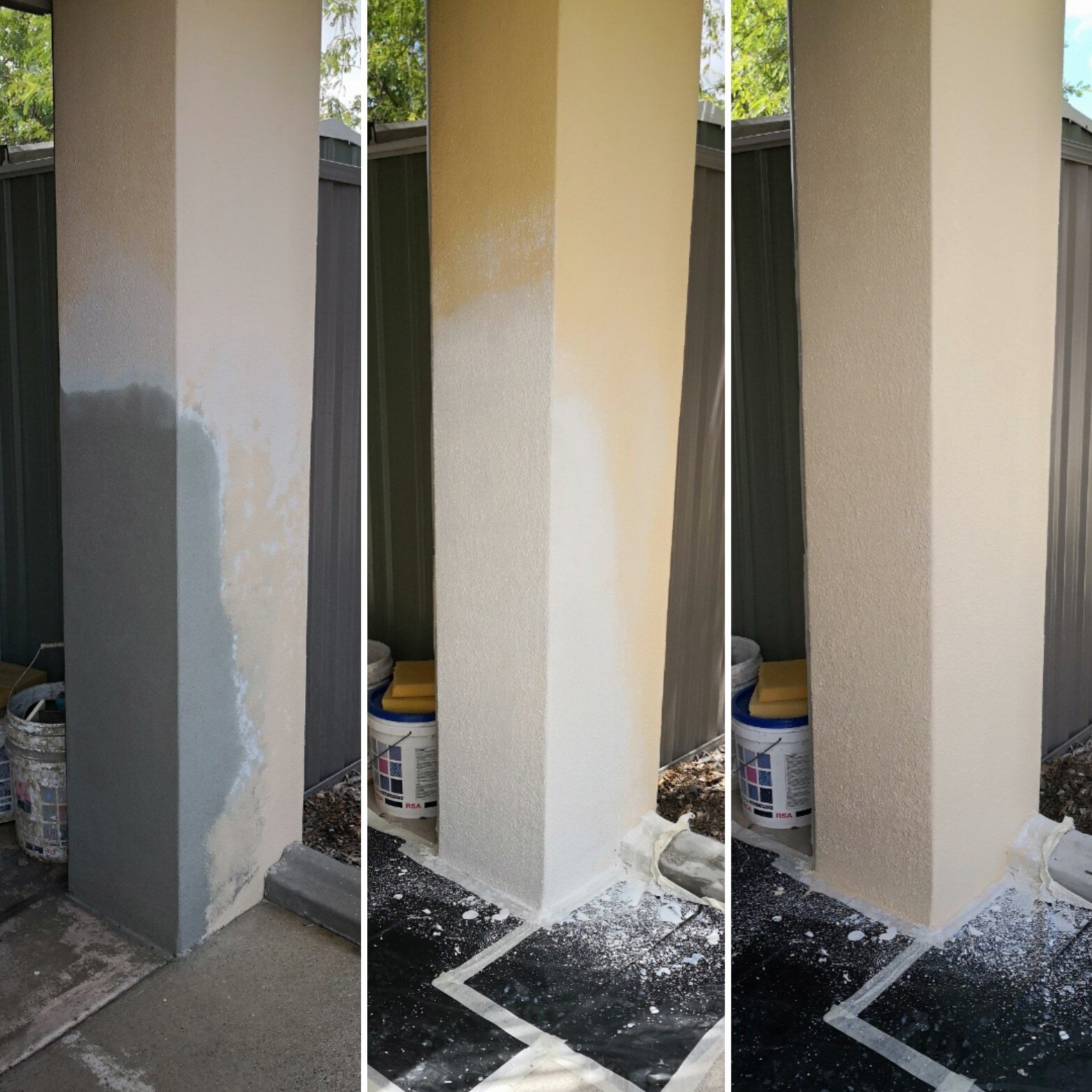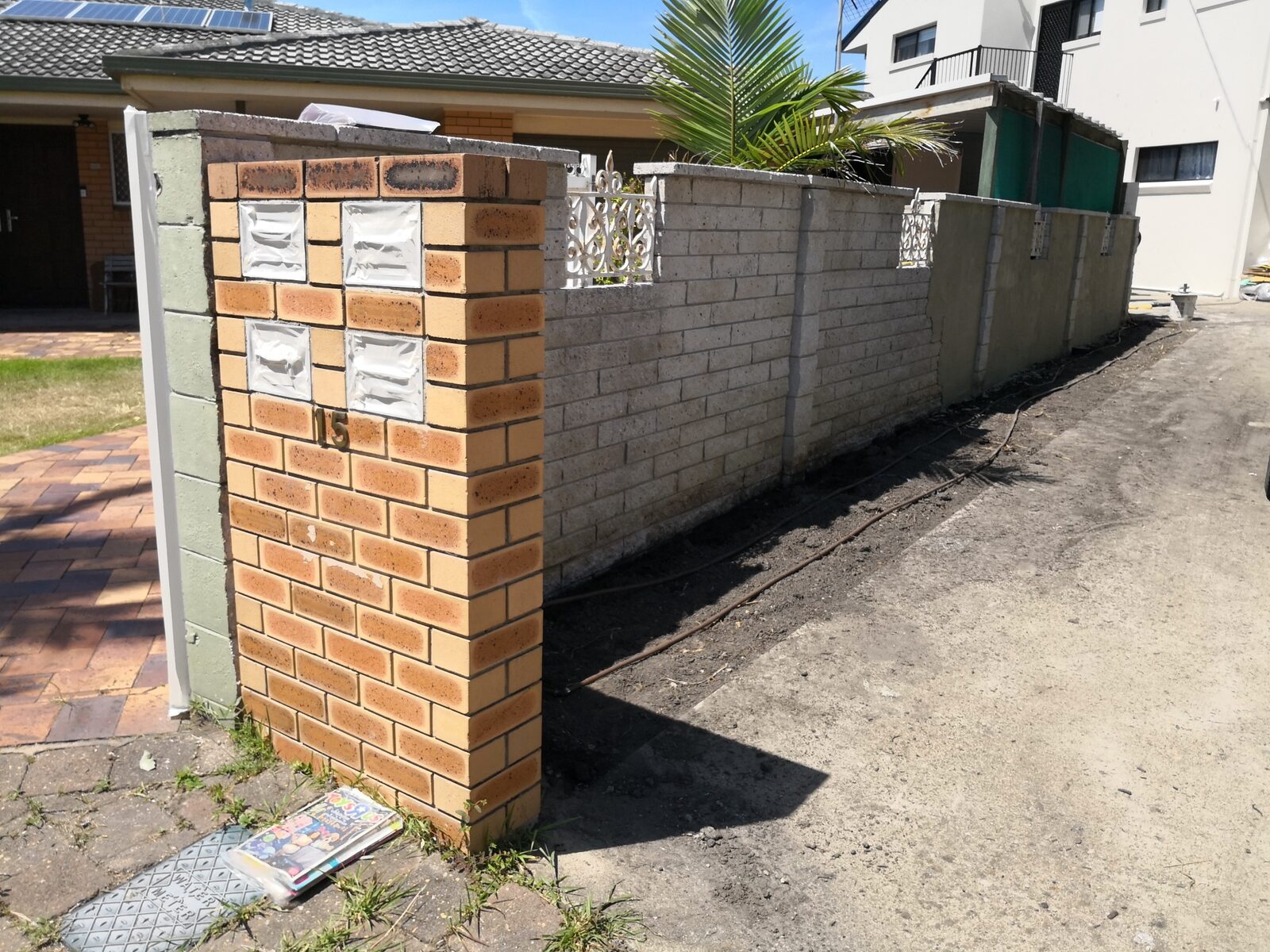
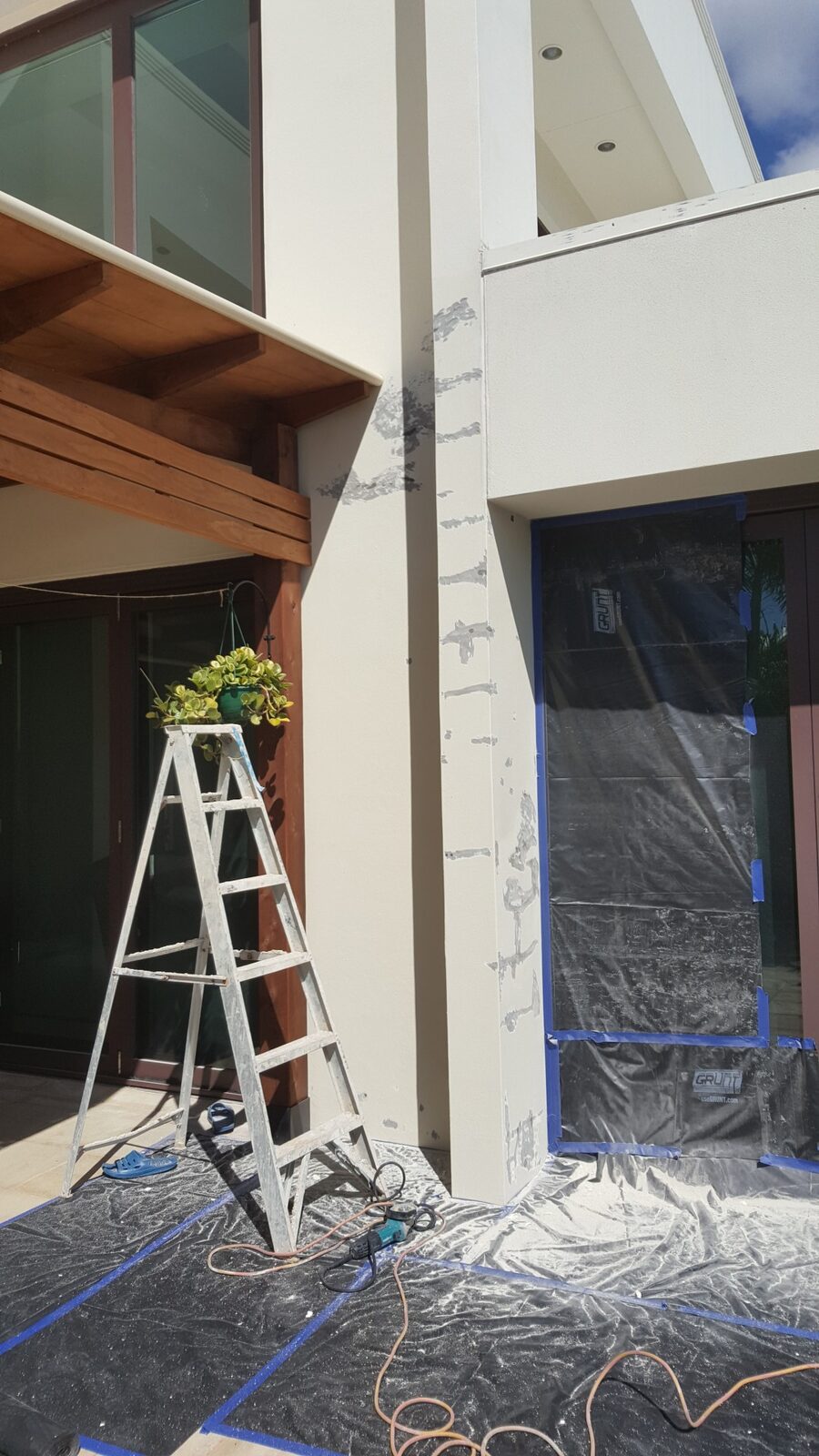
Render cracks are one of the top three calls Render Repair gets every week. The good news: most cracks are cosmetic, easily fixed and won’t come back. The bad news: a small number are pointing at something bigger going on with the wall, and patching them without diagnosing the cause means you’ll be calling someone again in 12 months.
This guide walks you through the four crack types we see on the Gold Coast every week, what each one usually means, and what to do about it.
1. Hairline (cosmetic) cracks
A hairline crack is finer than the edge of a 5c coin and runs in a more-or-less random pattern. They’re almost always cosmetic — render is a thin coat over a substrate that moves with temperature and humidity, and a small amount of cracking as it cures and lives is completely normal.
Fix: a flexible filler followed by a paint blend is enough. On large areas an elastomeric (flexible) top-coat will bridge them and stop new ones forming.
2. Stepped cracks (following the bricks)
If you can see a crack zig-zagging along the line of the bricks underneath the render — horizontal along the mortar joints, vertical at the corners — that’s a stepped crack and it tells you the brickwork itself is moving. Common causes are minor footing settlement, tree roots disturbing the slab, or thermal movement on a long uninterrupted wall.
Fix: investigate the cause first. If movement has stopped (which it usually has after the home settles), we cut out the cracked render in a generous strip, mesh-reinforce it and re-render. If movement is ongoing you’ll need a structural fix before any render goes back.
3. Drummy / hollow cracks (with bubbling)
Tap the wall around the crack with a knuckle. If it sounds hollow (drummy), the render has lost its bond with the substrate. This is almost always water — usually a failed flashing above the affected area letting water in behind the render.
If you only do one thing after reading this article: tap the wall. A drummy sound means the render is no longer bonded to the substrate, and no surface filler will fix it.
Fix: trace the source of the water (window flashing, parapet cap, damaged sill), fix that first, then cut out the drummy render past the bond line, key the substrate, mesh-reinforce, re-render and re-paint. There is no shortcut on this one.
4. Map / random cracking across a wide area
A spider-web pattern of fine cracks all over the elevation is usually a sign that the render mix was wrong — too rich in cement, not enough sand, or applied too thick in one coat. Less commonly it’s sun damage on a non-flexible paint over a wall that moves a lot.
Fix: this one is usually a re-render. Patching individual cracks across a wide area gives you a quilt of patches and the underlying problem will keep producing new cracks. We’ll quote you on stripping the failed coat back to substrate and re-rendering with a properly proportioned mix.
What to do today
- Have a look at the crack and decide which of the four types it is.
- Tap the wall around it — drummy or solid?
- Look up — is there a window, sill or parapet above the crack that might be letting water in?
- Take a couple of photos (close up + a step back) and either send them to us or have us pop out for a free quote.
Need a hand? Render Repair covers the entire Gold Coast — crack & damage repair, full re-rendering and render painting. Free quotes, fixed prices. Call us on 0405 772 878 or request a quote online.
About — Render Repair is the Gold Coast’s render & repaint specialist. 30+ years on the tools, QBCC #1192125. Honest quotes, fixed prices, finishes you can’t pick from the original wall.